 Reviews



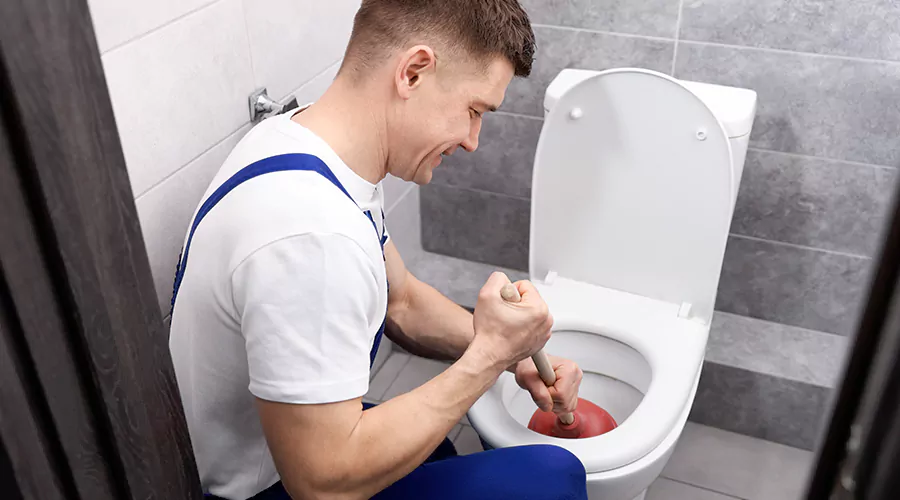
You can often unblock a toilet in 20 to 30 minutes with a flange plunger, while professional clogged-toilet repair costs about $85 to $600 in 2026. Stop flushing first because another tank of water can push an already high bowl over the rim.
The safest way to unblock toilet waste is to start with controlled pressure. A soft paper blockage usually needs a different approach from a toy or another solid object.
Move from the least aggressive method to the next only when the previous step fails. This protects the porcelain and reduces the chance of pushing the blockage farther into the trap.
What Should You Do Before Trying to Unblock the Toilet?
Stop flushing as soon as the bowl starts rising. Shut off the supply valve if water continues entering the tank. Wait for the bowl level to drop before adding water or inserting a tool. This simple response lowers the immediate risk of wastewater reaching the bathroom floor.
- Remove the tank lid if the shutoff valve will not turn.
- Push the flapper closed if water is still entering the bowl.
- Put towels around the toilet base.
- Wear rubber gloves before touching contaminated water.
- If the bowl is almost full, remove enough water to use a plunger safely.
Look into the outlet before doing anything else. A visible solid object should be removed rather than pushed deeper.
Home Depot recommends stopping incoming water before plunging when a clog creates an overflow risk.
Why Does a Toilet Become Blocked?
A blocked toilet forms when material cannot pass through the curved trapway or the drain beyond it. Toilet paper can compact inside the trap. Wipes can remain intact. A foreign object can create a narrow point that catches more material during later flushes.
- Common causes include excessive paper.
- Another cause is an item that should not have been flushed.
- A developing blocked toilet drain can also let water pass slowly before closing completely.
This explains why some toilets seem normal after one flush yet fail on the next.
The key distinction is whether the obstruction can break apart. Soft material often responds to plunging. A rigid object usually needs retrieval.
How Does a Toilet Blockage Progress?
A toilet blockage often develops before the bowl stops draining completely. The first sign may be slower water movement. The next stage is usually a rising bowl. A complete stoppage creates the greatest overflow risk because new flush water has nowhere to go.
| Stage | What You Notice | Main Concern | 2026 Cost Exposure |
|---|---|---|---|
| Early restriction | Flush drains slowly | Material collects | Often DIY |
| Partial blockage | Water rises then falls | Overflow risk | Low tool cost |
| Full blockage | Water barely moves | Wastewater can spill | $85 to $600 |
| Deeper restriction | Other drains react | Drain system problem | Can cost more |
A clogged toilet costs about $85 to $600 to repair in 2026. More extensive pipe repairs can range from about $70 to $700 depending on the underlying problem.
Early action matters because repeated flushing adds water without removing the cause.
What Are the Signs of a Serious Toilet Blockage?
A serious blockage changes how quickly the bowl drains and can sometimes affect other fixtures. An isolated soft clog usually remains limited to one toilet. Reactions elsewhere in the bathroom suggest the restriction may sit farther downstream.
- The bowl fills close to the rim. Water cannot leave fast enough.
- The water barely moves after several minutes. The opening may be almost closed.
- The blockage returns after plunging. Part of the obstruction remains.
- The toilet makes strong gurgling sounds. Drain airflow has changed.
- Another toilet reacts during flushing. Connected piping may be involved.
- Water appears in a shower. Wastewater may be meeting a downstream restriction.
- A solid item disappeared into the bowl. The trap may contain an object.
- The bowl drains only after a long delay. A narrow passage remains.
- The water rises without a normal flush. The problem may be farther down the system.
- An auger meets the same hard stop repeatedly. A rigid obstruction may be present.
These clues help you choose between plunging and a deeper mechanical method.
What Is the Best Way to Unblock a Toilet?
The best way to unblock a toilet is usually a flange plunger when soft waste or toilet paper caused the stoppage. The flange fits into the toilet outlet and forms a stronger seal than a flat sink plunger. Water inside the cup then transfers pressure to the clog.
- Place the flange inside the outlet.
- Tilt the plunger to let trapped air escape.
- Push down gently on the first stroke.
- Keep the rubber sealed against the bowl.
- Use controlled strokes for about 20 to 30 seconds.
- Finish with a firm pull.
This Old House recommends emphasizing the pulling action because pushing can compress material deeper into the narrowing trapway. Lowe's recommends keeping enough water in the bowl to cover the plunger cup and working it for roughly 15 to 30 seconds before checking drainage. Wait before testing. A sudden drop is a positive sign but does not prove the passage is completely open.
Can You Unblock a Toilet Without a Plunger?
A soft paper blockage can sometimes loosen when it sits in warm water. This approach is best when the bowl has already dropped to a safe level. It will not remove a toy or another solid item lodged inside the toilet.
- Add dish soap to the bowl.
- Then add hot tap water slowly.
- Do not use boiling water.
- Give the mixture time to reach the obstruction.
- Watch whether the level begins falling.
- Do not add more water if the bowl starts rising again.
This method works by softening waste while reducing friction inside the trap.
A solid obstruction will not dissolve. Repeated attempts can push that object into a harder-to-reach position.
When Should You Use a Toilet Auger?
Use a toilet auger after proper plunging fails and the blockage appears to sit inside the toilet trap. A closet auger has a protective sleeve around part of the cable. That design helps limit metal contact with the glazed porcelain while reaching deeper than a plunger.
- Insert the curved guide into the toilet outlet.
- Advance the cable slowly.
- Turn the handle as the cable moves.
- Stop when you feel firm resistance.
- Work the cable gently against the obstruction.
- Then retract it slowly.
This Old House advises keeping only a short section of cable exposed at a time. Shorter sections provide better control while the cable passes through bends.
A hard stop does not always mean more force is needed. The cable could be meeting the toilet's internal curve.
How Can You Test Whether the Toilet Is Clear?
A controlled water test is safer than immediately using a full tank flush. Wait until the bowl sits at its normal level. Add a manageable amount of water and watch how quickly it leaves before returning the toilet to regular use.
- Pour water steadily into the bowl.
- Stop if the level rises sharply.
- A clear trap should accept the water quickly.
- A partial obstruction will make the level rise before it falls.
- Repeat the test only after normal drainage returns.
This test matters because a temporary drop can happen even when part of a clog remains.
A normal toilet should accept its next flush without hesitation.
When Should You Call a Professional?
Professional diagnosis becomes appropriate when plunging and a toilet auger do not restore drainage. It is also appropriate when several fixtures react together. These conditions can mean the obstruction sits in a branch drain or farther into the building's waste piping.
In 2026, clogged toilet repair runs about $85 to $600. The national average for general toilet repair is about $271. Pipe repair can reach roughly $700 depending on the problem.
Professional help is reasonable when:
- Sewage appears in another fixture.
- Several toilets stop draining.
- An object cannot be retrieved.
- The blockage returns immediately.
- An auger cannot reach past the restriction.
- Wastewater rises without anyone flushing.
Deeper equipment can reach places that a household closet auger cannot.
How Can You Prevent Another Blocked Toilet?
Prevention starts with controlling what enters the fixture. Toilet paper is made for toilet drainage systems. Stronger paper products do not break apart the same way. Wipes can also remain intact long enough to contribute to recurring restrictions.
- Keep a wastebasket near the toilet.
- Flush smaller paper loads when needed.
- Keep small objects away from an open bowl.
- Respond when the toilet starts draining slowly.
- Check weak flushing before it turns into a blockage.
The EPA notes that WaterSense toilets use no more than 1.28 gallons per flush while meeting performance requirements. Low water use alone does not mean a properly operating modern toilet should clog.
Conclusion
Knowing how to unblock a toilet starts with stopping the next flush and identifying what is blocking the trap. A flange plunger handles many soft clogs. A closet auger reaches farther when plunging fails. Repeated backups can point beyond the fixture. Check your bathroom this week and make sure a proper flange plunger is available before the next blockage occurs.
Frequently Asked Questions
Can a blocked toilet clear itself?
Soft toilet paper can break down over time. A solid object will normally remain inside the trap until it is removed.
How long should you wait before trying again?
Give a soft blockage about 15 minutes after adding warm water. Stop waiting if the bowl is rising or wastewater appears elsewhere.
Can you use boiling water in a blocked toilet?
Avoid boiling water because rapid temperature change can damage porcelain. Hot tap water is the safer option.
Why does the toilet drain slowly after I unblock it?
A partial obstruction may still remain. Normal drainage should be quick rather than delayed after every flush.
Can too much toilet paper block a toilet?
Yes. A large paper load can fill the trap faster than water can carry it through.